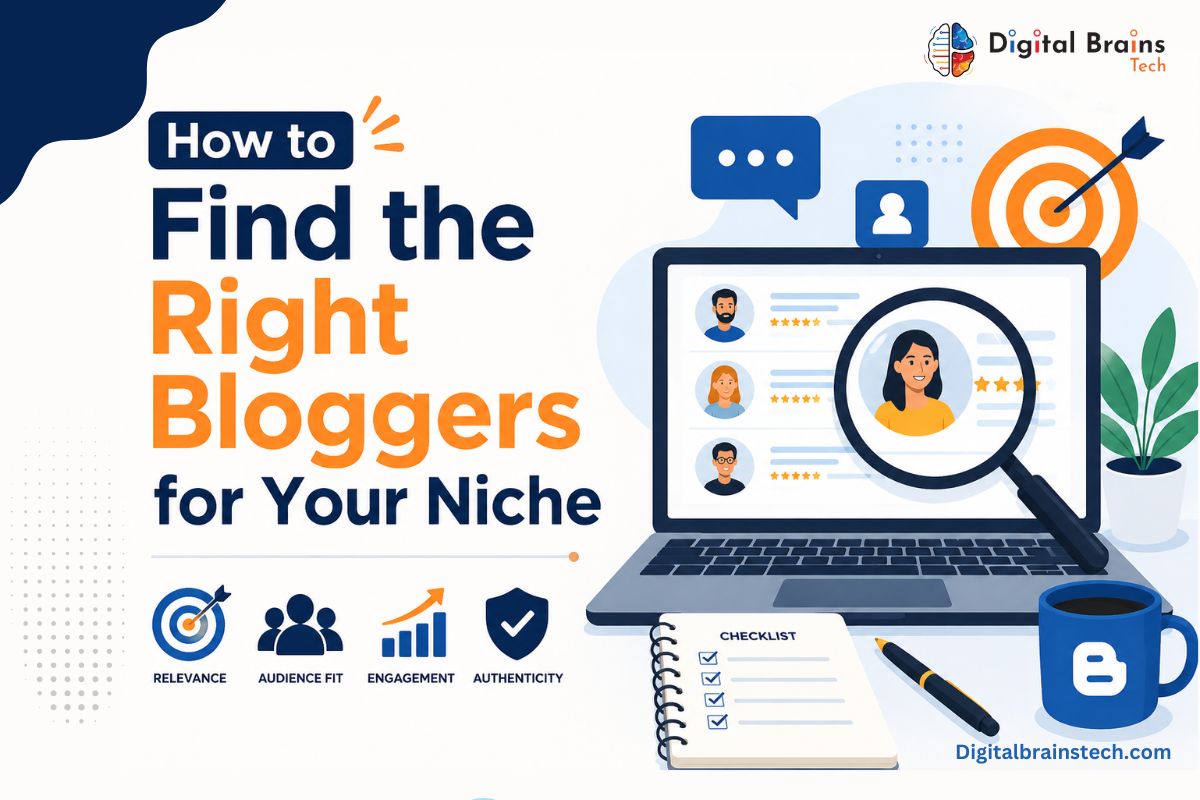
The blogger with the highest domain authority or the biggest audience is not necessarily the best one for you. The foundation of effective blogger outreach is credibility, content quality, business relevance, audience, and a topic aligned with your goal.
How to make the right decision when finding the correct blogger for your niche?
Any time you want digital PR, guest post opportunities, referral traffic, relevant backlinks, brand mentions, thought leadership, or product reviews, you must ask one simple question:
“Does the blogger’s website already have the trust, audience, and context needed to provide value to your readers?”
This blog shows you how to answer that question. Let’s begin.
What is Blogger Outreach?
Blogger outreach is the process of identifying and building relationships with relevant bloggers, creators, publishers, editors, and industry experts to earn legitimate opportunities for exposure, expert contributions, reviews, mentions, referrals, and editorial links.
Get to know everything about blogger outreach.
Is Guest Posting the Only Blogger Outreach Approach?
Blogger outreach is broader than guest posting. Depending on your objective, a collaboration could result in a:
- Brand mention
- Product or service review
- Original research citation
- Relevant editorial backlink
- Expert quote
- Interview or podcast appearance
- Newsletter mention
- Industry roundup inclusion
- Guest article
‘What you want blogger outreach to achieve’ is the right choice amongst all these.
1. Start With Your Business Goal

Your business goal determines which bloggers are worth pursuing. Take a look at the table below helping you understand the right-fit prospects per your business goal.
| Business goal | Best-fit prospects |
| Relevant backlinks | Topically relevant publications with strong editorial standards |
| Referral traffic | Websites with an active, relevant readership |
| Lead generation | Publishers whose audience closely matches your buyers |
| Brand awareness | Publications and creators with meaningful reach |
| Product reviews | Specialist review sites and relevant creators |
| Thought leadership | Industry publications and expert-led media |
| Digital PR | Newsletter writers, experts, journalists, publications |
| Local visibility | Community sites, regional publications and local bloggers |
Example:
A dental clinic looking for implant patients should not automatically prioritize a high-authority business website. A smaller local parenting publication may be a stronger prospect if its readers are families living near the clinic.
2. Define Your Ideal Blogger
At Digital Brain Tech, we have created our criteria for every client. For every new client we have, we build the prospect list as per the criteria to define the right ideal blogger outreach services for them. We identify the right blogger for a website as per our 8 factors defined by our experts.
Those 8 factors are given below.
| Factor | What to check | Why it matters |
| Niche relevance | Does the site consistently cover your industry, product, service, or related problems? | Creates a relevant context for your brand. |
| Audience fit | Who reads it? Look at article topics, newsletters, social audiences, comments, and communities. | A relevant topic is valuable only if it reaches the right people. |
| Geographic relevance | Where are the readers located? | Especially important for local businesses. |
| Content quality | Review recent articles for originality, depth, accuracy, editing, sources, and usefulness. | Your brand will be associated with that content. |
| Credibility | Check authors, credentials, editorial standards, expert reviewers, and sourcing. | Helps protect trust and brand reputation. |
| Organic visibility | Check whether the site’s content actually appears in search results. | Indicates whether the publication can be discovered organically. |
| Engagement | Look beyond follower counts; check comments, shares, subscriptions, and community activity. | Helps distinguish an active audience from passive reach. |
| Referral potential | Ask whether the right people would actually click on your mention. | Connects outreach with traffic, leads, and business value. |
#A useful rule: Check more than one metric to decide whether a blogger is worth contacting.
3. Reach Where Your Audience Is

Firstly, understand where your audience gets information. It is one of the most common outreach mistakes that businesses define their niche too narrowly.
They might use the keywords to search for what their audience is searching for, but customers might not necessarily search for your exact industry terms.
An individual looking for physiotherapy may search the following:
- Running injury prevention
- Office posture tips
- How to recover from a running injury
- Lower-back pain exercises
- Returning to sport after surgery
These searches can lead to fitness blogs, wellness websites, sports communities, workplace health sites, publications, etc
They might not type the words “physiotherapy blogs” on search engines or AI-powered platforms.
So, it is important to map your audience’s information journey.
How to Map Your Audience’s Information Journey?
Follow a framework to get to know where your audience is getting information. It will help you figure out publishers your customers already trust.
Problem → Search topic → Content type → Publisher type → Expert/community
For example:
Running injury → injury recovery → sports article → running publication → physiotherapist
Don’t Miss: How to Become an AI-Cited Source.
4. Keywords to Find Relevant Bloggers

Using the right search operators is the key. Once you know what your audience reads, use Google to find relevant publishers. Try searches such as:
[niche] bloggers
- [niche] blogs
- [niche] “write for us”
- [niche] “guest post”
- [niche] “contributor”
- [niche] “submit an article”
intitle: blog [niche]
[niche] “expert roundup”
[niche] “best blogs”
For local businesses, add your location:
- [city] [industry] bloggers
- [city] lifestyle blog
- [city] parenting publication
- [city] health publication
Hint: Do not look only for guest-post opportunities because not every valuable prospect has a “Write for Us” page. Your focus should be to search for relevant publishers first.
Some strong publishers may instead:
- Cite experts
- Review products
- Feature businesses
- Cover industry news
- Interview founders
- Publish original research
- Publish expert commentary
- Interview industry professionals
Also Read: Use AI in Digital Marketing to boost traffic and rankings
5. Use Competitor Research to Find Opportunities
You can reduce your efforts by analyzing where your competitors are publishing or referring to their domain.
Do not think:
“My competitor has a link, so I need the same link.”
Instead, ask (better outreach ideas):
“Why did this publication mention them, and is there a legitimate reason they might mention us?”
Use tools like Semrush, Google Search, Ahrefs, and Google Search Console to investigate:
- Industry comparisons
- Competitor interviews
- Websites ranking for similar topics
- Websites linking to competitors
- Articles mentioning competitors
- Publications reviewing competitors
- Contributors writing about your category
6. How to Evaluate Bloggers Before Contacting Them
DA, DR, or traffic alone must not be the decisive factors. But read their recent articles. Look at the search visibility, outbound links, authors, audience, and editorial environment.
A useful evaluation framework is:
| What to evaluate | What good looks like |
| Topic | Consistently covers subjects relevant to your business. |
| Audience | Match your target customers. |
| Location | Overlaps with your target market. |
| Content | Accurate, original, useful, and well edited. |
| Credibility | Authors and sources are credible and identifiable. |
| Search visibility | Multiple pages earn organic visibility. |
| Engagement | Active interaction with the content or community. |
| Referral potential | The site could realistically send qualified visitors. |
| Commercial relevance | Content addresses problems connected to your buying journey. |
| Overall reputation | You would be comfortable associating your brand with the publication. |
What about Domain Authority and Domain Reference?
There is a huge limitation with DA and DR. They can’t tell you whether the publication is active, the traffic is valuable, the content is credible, the audience is relevant, and the readers are potential customers. They are supporting signals but not final decisions. That is why audience fit and relevance should normally come first.
Having this knowledge will help you have a constructive conversation with your blogger outreach services provider.
7. Authority vs. Relevance: What Matters More?
Consider these four prospects:
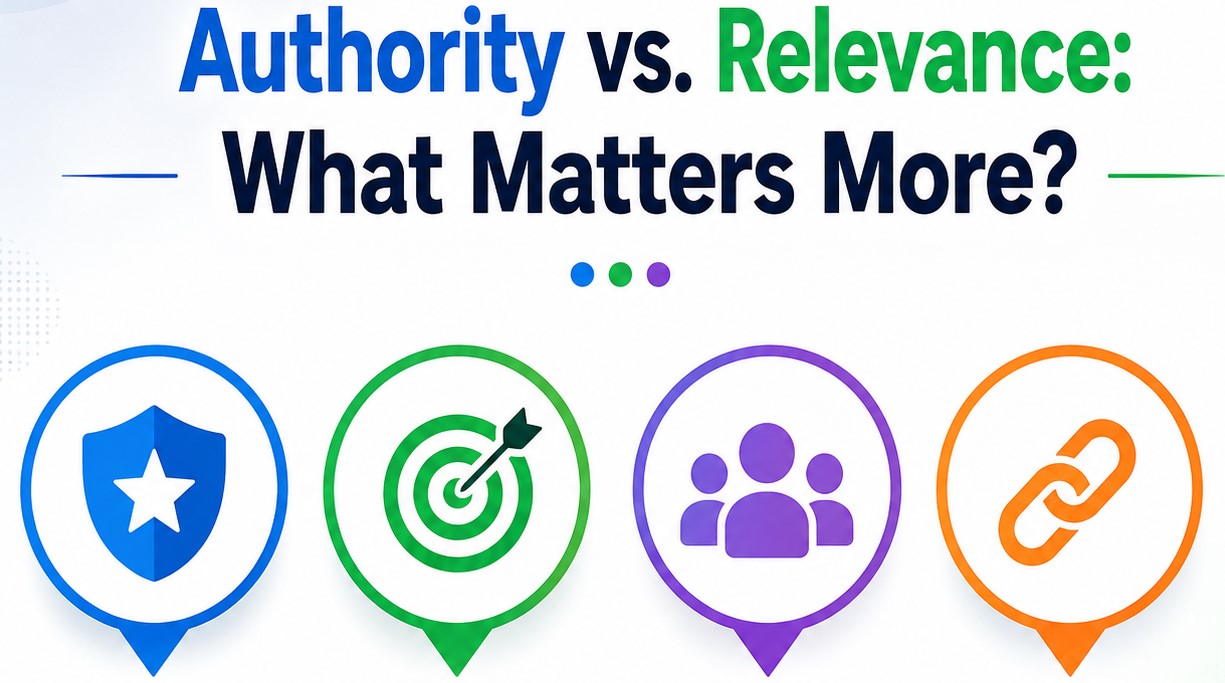
- Authority: how established a website appears per a third-party tool.
- Relevance: how closely its subject matter matches your business.
- Audience fit: whether its readers actually matter to your business.
- Referral potential: whether exposure can lead to meaningful conversations and relationships.
| Website | Authority | Relevance | Audience fit | Potential value |
| General business site | High | Low | Low | Moderate/low |
| Niche industry publication | Medium | High | High | High |
| Local community publication | Medium | High | Very high | High for local businesses |
| Random guest-post site | High | Low | Low | Poor |
Find value through blogger outreach, not run behind numbers. The experts at our company have researched and analyzed the framework that can work to figure out whether an outreach service is a fit or not. We have figured out five questions. Ask the following questions (in order) to compare two prospects
- Is the topic relevant?
- Is the audience relevant?
- Is the publication credible?
- Is its content genuinely useful?
- Could it generate meaningful exposure or referral traffic?
- Then consider its SEO metrics.
8. Bloggers You Should Probably Avoid
Some websites perform well on the SEO tools but not for your business.
At Digital Brains Tech, we ask this question before finalizing our collaboration for our clients: Does this website serve an audience, or does it primarily serve advertisers and link buyers?
Check the websites for the following. If they have any, then it is a poor fit for your website
- Completely unrelated topics across one domain
- Thin or poorly edited content
- Obvious content spinning
- Suspicious backlink patterns
- Excessive sponsored content
- Large numbers of irrelevant outbound links
- Unrelated gambling, adult, or pharmaceutical links
- No identifiable authors
- No editorial standards
- Guaranteed ranking promises
- Websites primarily built to sell links
- Large volumes of low-quality content
See How This Works in Different Industries: Dental and App Development
| Parameter | 🦷 Dental Clinic | 📱 App Development Company |
| Goal | Attract local patients for implants or orthodontics | Reach startup founders and SaaS businesses |
| Look for | Local parenting, health, wellness, and lifestyle publications | Startup, SaaS, technology, product, and UX publications |
| Example search | Chicago parenting blog dental health | startup blogs contributor |
| Good prospect | A trusted local publication whose readers include families in the clinic’s service area | A smaller startup publication read by founders and business decision-makers |
| Poor prospect | A high-DA site covering unrelated topics just because its SEO metrics look strong | A huge technology site whose audience is mainly general consumers rather than potential clients |
| Possible collaboration | “What Parents Should Know Before Choosing Orthodontic Treatment” | “How Much Does It Cost to Build an MVP in 2026?” |
What this shows: The best prospect is not necessarily the website with the highest traffic or authority. It is the one that reaches the right audience and provides a relevant context for your expertise or offering.
Final Takeaway
A public show someone who can create a strong connection between your business, your expertise, and the people you want to reach. It is not about building the biggest possible prospect list. For that, focus on your
- Business goal
- Audience
- Relevant publisher
- Manual evaluation
- Scoring
- Prioritized outreach
- Useful collaboration
- Measurable results
Go for the credibility of the publishers rather than their number and links. That shift turns blogger outreach from a basic link-building exercise into a broader strategy for digital PR, audience building, referral traffic, thought leadership, and brand visibility.
FAQs
1. How do I find bloggers in my niche?
Know your business goal and target audience. Then use search operators, industry publications, competitor research, newsletters, communities, and specialist websites to identify publishers that reach your audience.
2. How do I identify relevant bloggers?
Look for three things first: topic relevance, audience relevance, and business relevance. Then evaluate content quality, credibility, organic visibility, engagement, and referral potential.
3. What metrics should I use to evaluate a blogger?
Check third-party authority metrics, engagement, organic visibility, traffic estimates, publishing activity, and referral potential. Also look for qualitative factors such as relevance, audience fit, and credibility.
4. How do I find bloggers for guest posts?
Search for relevant niche publications and identify their contributors, editors, or content managers. Queries such as [niche] “write for us” and [niche] “contributor” can help. Don’t limit your research to guest posting websites.