You finally decide to purchase the best software suite for your startup. You sit down one fine day, but rather than opening Google, you go to YouTube. Read the thread on Reddit and prompt AI tools to summarize the pros and cons of the respective software suite.
If you were buying it a decade ago. Things were completely different. You used to just type a keyword in the search engine and click the first “blue link,” and decide.
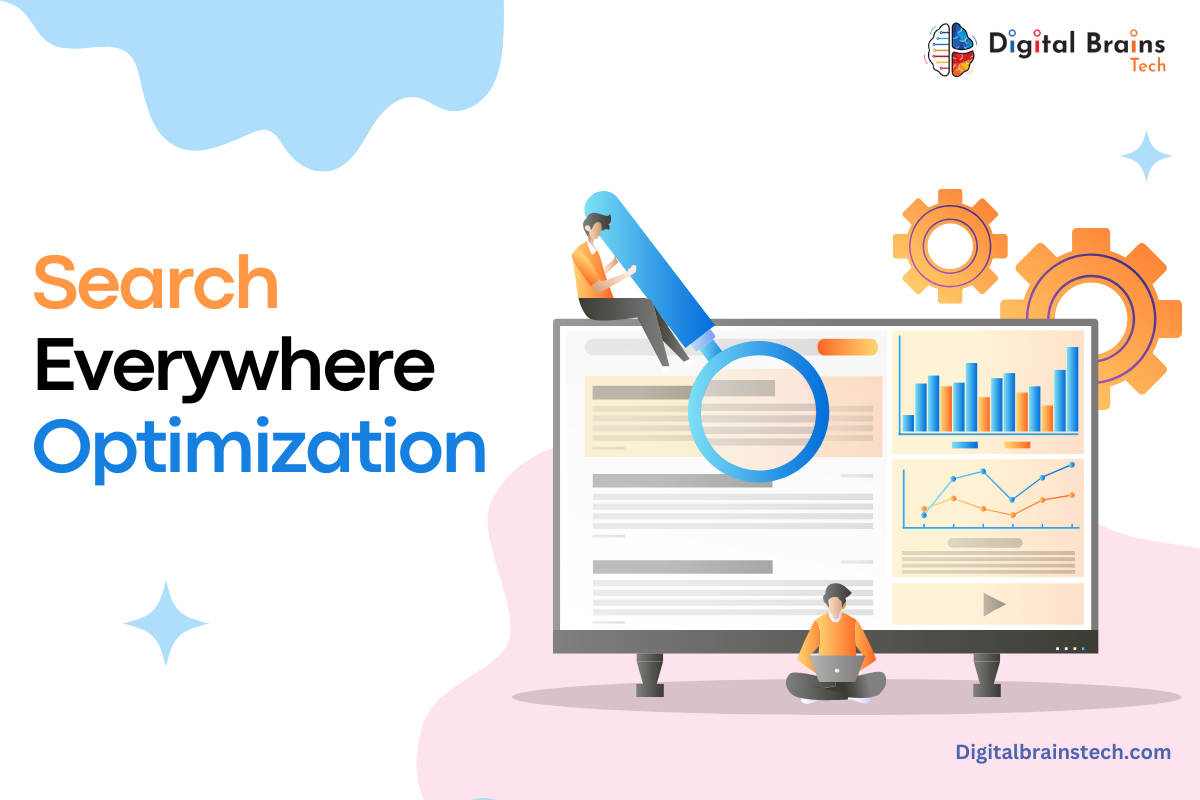
The shift is huge, and it is expanding exponentially every day. Now, it is the era of Search Everywhere Optimization. Optimizing only for search engines is not enough. You have to take your brand to all the locations to drive business and revenue. The audience is using all platforms. To win in 2026, you must master the trinity of SEO, GEO, and AEO.
What is Search Everywhere Optimization?
The difference between both the SEOs- Search ‘Engine’ Optimization and Search Everywhere Optimization can be understood easily with a definition. The former is optimizing for the ‘search engines, ‘ and the other one is optimizing your website for ‘everywhere.’
To date, there are 7+ platforms daily, including YouTube, TikTok, Reddit, Amazon, and AI chatbots. Brands have to build their visibility across every platform to actually optimize for ‘everywhere.’
Building Your Digital Presence Everywhere
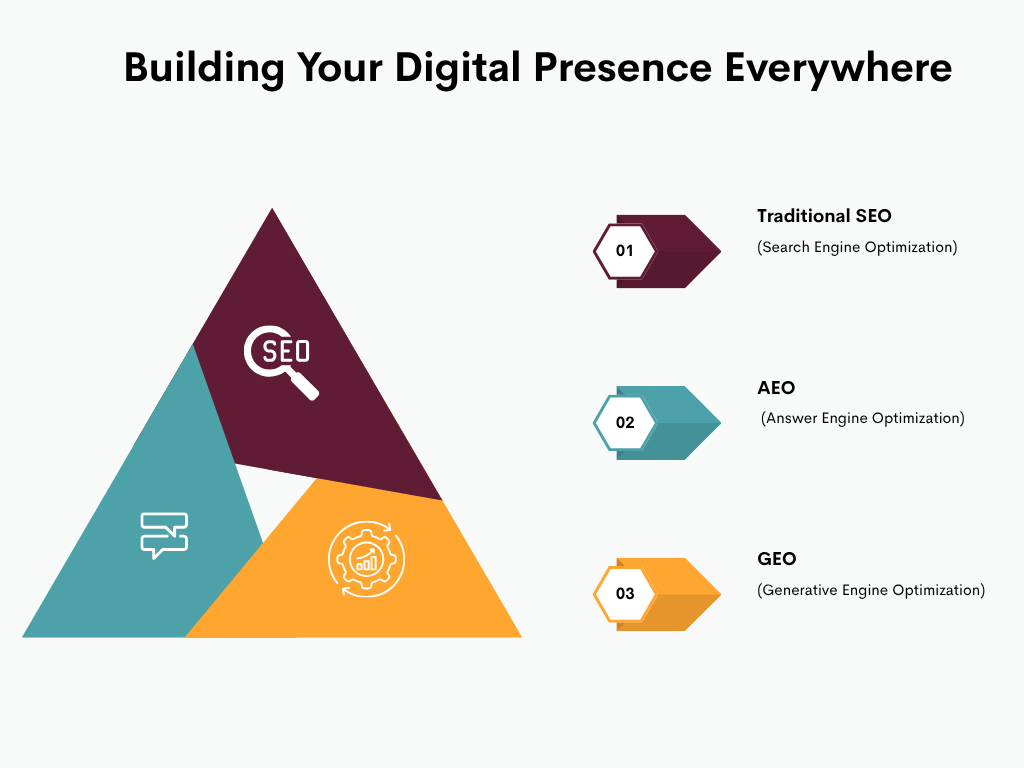
Consider the different strategies of your digital presence as a premium building in the neighborhood.
- Traditional SEO (Search Engine Optimization): It is like laying the foundation of the building and its curb appeal. It is the structure of the building that the internet crawlers approve of. Search Engine Optimization concentrates on the visual appeal of the site to entice a visitor by showing the building’s front door (through clicking). SEO for professional services is upgrading itself for the new SEO (search everywhere optimization).
- AEO (Answer Engine Optimization): This is like the person at the entrance gate to help you navigate the building and guide you. Most importantly, they give a clear, quick response and instant reply to questions. For example, “What time is the open house?” The visitor doesn’t need to explore further after getting a response from AEO.
- GEO (Generative Engine Optimization): This optimization strategy is like building your overall reputation. For example, if there are multiple visitors and one of them needs to know “Who is the most trusted architect in town?”, GEO answers it based on many opinions, reviews, and mentions, not only from one source. GEO helps make sure you’re the name that comes up in that answer.
Pillar 1: Traditional SEO: The Long-Lasting Foundation
No matter how rapidly AI is evolving in all fields, traditional SEO is still holding its endurance. Yes, it is evolving too. According to many studies conducted, it has been found that over 40% of AI-generated citations are fetched from the top 10 results on Google’s ranking.
But there are certain factors to strengthen your technical foundation—
- a. Your site must load in under 3 seconds.
- b. Must be perfectly mobile-responsive.
- c. Must prioritize E-E-A-T (Experience, Expertise, Authoritativeness, and Trustworthiness).
AI and search engines now prefer content created by real experts, backed by credible sources. These look for real human input behind the content.
Pillar 2: AEO: Winning the “Zero-Click” World
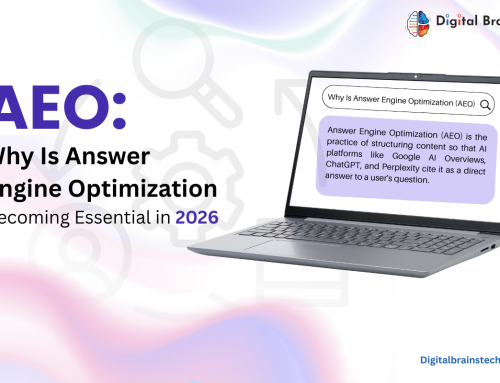
Earlier, the marketing advertisements used to read “just a few clicks away.” But now it is the world of ‘zero clicks reality.’ Voice assistants and Google’s AI Overviews often resolve the query directly on the results page, and hence, remove the need for a click. So, as a brand, what you need to do under AEO is to be quoted under the results.
How To Do It?
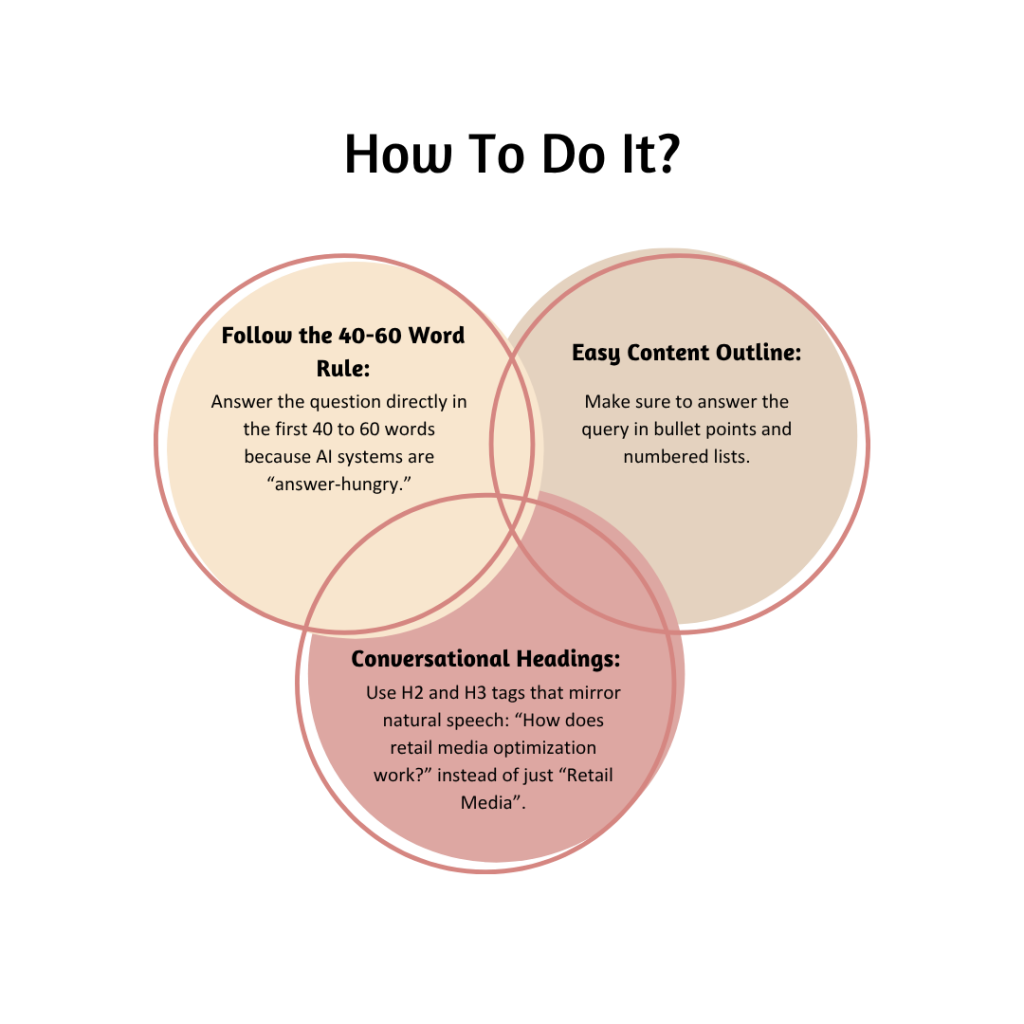
- Follow the 40-60 Word Rule: Answer the question directly in the first 40 to 60 words because AI systems are “answer-hungry.”
- Easy Content Outline: Make sure to answer the query in bullet points and numbered lists.
- Conversational Headings: Use H2 and H3 tags that mirror natural speech: “How does retail media optimization work?” instead of just “Retail Media”.
Pillar 3: GEO: How AI Describes You
GEO means influencing what AI says about you. It is about how your content is referenced, understood, and then recommended by different LLMs like Gemini, Perplexity, and ChatGPT. GEO seeks a citation, and SEO seeks a click. Boost your visibility in AI responses by up to 40% using specific “GEO methods”:
- Cite Your Sources: Increase the credibility and authority of your content by citing other high-authority sources within your text. It makes AI models more likely to cite you as a reliable authority.
- The Statistics Addition: People and AI overviews love numbers. Rather than just saying that your digital marketing company helps your clients grow, say the percentage growth, such as “staggering 70% increase in results.
- The Quotation Addition: Add quotes from experts to increase engagement and AI interest.
The Search Everywhere Roadmap: A 6-Step Strategy
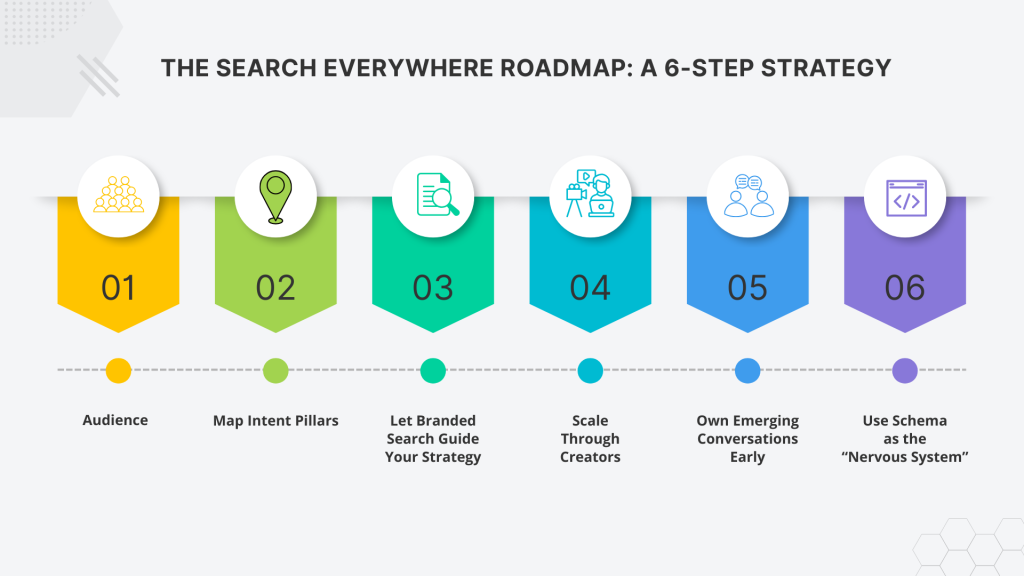
Step 1: Audience (The Human Intelligence)
Start from where you are with what you have.
It means ask your audience to share how they found you. This data informs questions and helps you in making the right decisions. Rather than just jumping to do TikTok because everyone else is doing it. Don’t do it just for the sake of doing it. Understand where your audience found you, such as referrals, word of mouth, YouTube, Reddit, etc.
Step 2: Map Intent Pillars
Not only keywords, but also know the intent of the platform you are planning to work on. The intent is a pillar that must be followed to have the correct conversation with your audience. For example, “What is the best CRM for a startup with 5 employees?” Map where these conversations are “exploding.” For example, skincare trends remain silent on LinkedIn while they might be booming on Pinterest and TikTok.
Step 3: Let Branded Search Guide Your Strategy
One e-commerce brand in the USA, under the guidance of Digital Brains Tech, SEO for professional services, saw a whopping year-over-year increase in branded search by doubling down on the products they were already known for. Hence, it proved that being known for one thing beats trying to be known for everything.
The rise in the branded search is a clear sign of success. When the audience starts searching “[Your Brand] Reviews“) It means the audience is moving to a preferred destination. Not only searching randomly.
Step 4: Scale Through Creators
If you want to rapidly climb the success ladder, you need to partner with creators. You can’t do it all on your own. A volume that you want to create “everywhere” can’t be produced alone. Let the partners maintain their unique charisma and define their “Intent Pillar.”
Step 5: Own Emerging Conversations Early
Search Everywhere focuses on spotting early trends; on the other hand, SEO waits until the search volume builds. Search Everywhere builds presence on AI and social platforms before they peak. Hence, when search demand grows, you’re already familiar to the audience, not just another result.
Step 6: Use Schema as the “Nervous System”
Content should be easy to understand, not only for the audience, but for crawlers and AI systems. The best digital marketing companies are evolving because they are taking care of the schema markup of their client’s website. Be it a guide, FAQ, or content of a product, it should be crystal clear. It removes the “interpretation guesswork” for machines, hence making you 3x more likely to be cited.
Conclusion: The Future Belongs to the Trusted
Now, the one who can earn trust is truly in the game. Visibility alone is not going to serve. Whether someone finds you through a Siri command, an AI summary, or a Reddit thread, the goal is the same: just connect with those people and build trust with them. Aim to be the source that people can cite in their content. It is the true message of building trust in the eyes of the audience. Being genuinely helpful and credible will always matter.
Solving Professional Friction: FAQs for today’s Marketers
- Will I lose all my traffic to zero-click AI answers?
While top-level click-through rates may dip, the visitors who do click through from an AI chat often convert at 3x higher rates. They arrive “pre-sold” because the AI has already validated your expertise.
- Is this only for companies with massive budgets?
No. AI prioritizes clarity and structure over brand size. A well-structured niche site with proper schema can frequently outperform a household name that is technically disorganized.
- How do I know if it’s working?
Track your AI Visibility Score. The frequency with which your brand is mentioned, cited, and recommended across ChatGPT, Perplexity, and Gemini.