Sarah was pacing towards her tiny office in Boston. She ran P2P, an organic pet food startup, but struggled from the first day. No, she is not missing any marketing tactics, but still, the growth was stuck.
Her team has been launching quick and detailed last-minute campaigns, busy, but not moving forward. The pet food kibble was great, but she was getting overlooked by people, which was the main issue.
She has now hired a new marketing lead, Marcus. “Sarah,” Marcus began, “we’ve been chasing trends, but we need to make a repeatable system for attracting customers. We need to go back to Marketing 101: the Fundamentals.”
The Blueprint: The 7 Ps of Marketing
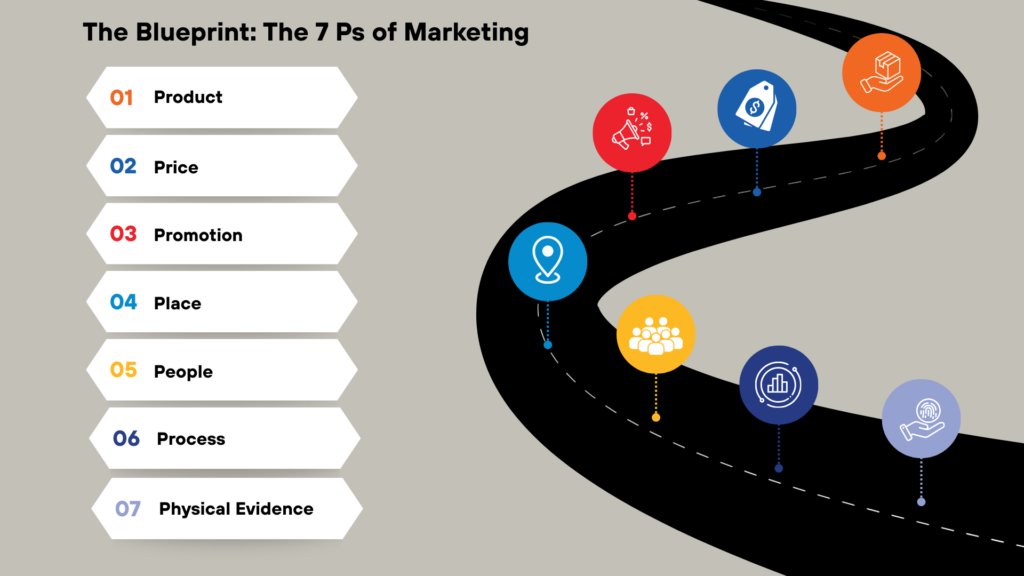
Marcus has worked on weekends and understands the business and low-key events well. Sarah and Marcus sat down to discuss it. He opened a notebook and drew seven circles, ” 7 Ps of Marketing,” he explained. “They are the foundation of every right marketing success and the right audience at the right time”.
Product:
Marcus said, “It’s not just what we sell, but what value it delivers and what problem it solves. Everything starts here-the Product. The product should solve a certain problem. Like our dog food solves low energy and allergies, we need to focus on every specification to craft strategies that resonate.
Price:
“Price communicates value,” Marcus continued. Sarah saw him in a very obvious way. On the other hand, Marcus explained that P2P is missing the balance of production costs with market research. This marketing fundamental helps to know what consumers are willing to pay.
With his decades of experience, Marcus suggested that Sarah experiment with promotional incentives, such as limited-time discount codes. It would have dual benefits: it would attract new buyers, and P2P wouldn’t have to permanently lower the perceived value.
Promotion:
Promotion doesn’t mean being too salesy. But the brand must tell its story to the right people at the right time. Marcus and Sarah discussed using a mix of integrated marketing communications, such as content marketing, partnering with influencer and email marketing, etc for P2P marketing success. Marcus also suggested she to get help from Digital Brains Tech a digital marketing company.
Place:
Marcus saw Sarah with shining eyes and said, “Our customers need to find us.” Be it brick-and-mortar stores or e-commerce stores. Marcus shared his experience with the experts of Digital Brains Tech, who rely on inbound marketing strategies using engaging content to bring customers directly to their website.
People:
Every individual connected must align with the ‘why’ of the brand. Every person is shaping the customer experience and hence must be authentic. From the delivery drivers to customer service reps, everyone delivers an external message to the buyers.
Process:
Process is the king. He said, “We need to think about the process rather than the results. So, it is important to use Artificial Intelligence to automate marketing, hiring, and other operations of the company.” Before that, a repeatable system is to be created so that a reliable process can be created. It will not only give us a competitive advantage but also ensure a smoother overall effort.
Physical Evidence:
Even in a digital ecosystem, tangible proof matters. For P2P, this meant their website’s user experience, the quality of their packaging, and the “overall look and feel” of their newsletters.
Defining the Philosophy: The Five Concepts
What next?
They followed the 7Ps of the marketing fundamentals for a few months. Sarah had one important question for Marcus. She asked, “But how do we think about our growth? Are we just trying to sell as much as possible?”
“There are five main marketing concepts that guide how businesses create value,” Marcus shook his head and said.
- The Production Concept: Focuses on making things faster and cheaper—great for low-cost brands, but not for a premium one.
- The Product Concept: Assuming customers want the “best quality”. Marcus warned that just because it’s great doesn’t mean people will notice. According to author Austin Kleon, one has to show their work to the world (without being a genius and a perfectionist).
- The Selling Concept: Pushes hard to get quick sales, even if it hurts long-term loyalty.
- The Marketing Concept: A customer-centric approach that focuses on meeting needs better than competitors.
- The Societal Marketing Concept: “This is where we belong,” Marcus argued. This approach balances profit and customer happiness while doing what’s good for society. They could build stronger loyalty by focusing on ethics and sustainability. In fact, 65% of marketers who speak up on social issues say it improves their brand’s performance.
Building the Heartbeat: Branding and the 7 Times 7 Rule
He explained, “Branding is the heartbeat of the brand while the marketing fundamentals are the backbone.” Marcus said that the right branding would transform a buyer of P2P into its advocate. The first step to be taken for this is working on its brand identity, that is, the logo, visuals, and its brand voice. It should sound “warm and conversational” rather than “corporate”.
To make the brand memorable, Marcus introduced the 7 Times 7 Rule. The rule states that an average potential customer must see a message from P2P at least seven times before making a purchase. Every company launching its first marketing campaign must focus on creating repeated exposure to build trust and familiarity. It is because the customer needs it before choosing a premium product.
| Implementation Category | Practical Action Item | Key Objective | Success Metric (KPI) |
| Product | Package and present the product based on its unique features and specifications | Identify strong USPs and solve clearly defined customer problems | Customer feedback scores, perceived value ratings |
| Price | Research competitor pricing and customer willingness to pay | Set a price point that balances cost, value perception, and profitability | Lead conversion rate, retention rate |
| Promotion | Execute an integrated marketing strategy across email, content, and social media | Communicate brand value through consistent messaging and positioning | Brand reach, engagement rate |
| Place | Audit and optimize distribution across online and offline channels | Ensure product availability where target customers are most active | Channel-wise engagement, ROI |
| People | Align internal teams around brand values and customer insights | Deliver consistent experiences and build long-term relationships | Customer satisfaction (CSAT), referral rate |
| Process | Map the customer journey and automate repetitive marketing workflows | Improve efficiency and reliability in delivery and lead nurturing | Workflow efficiency, customer satisfaction |
| Physical Evidence | Display testimonials, reviews, and case studies across digital touchpoints | Build trust by providing tangible proof of brand promises | Brand credibility index, sentiment trends |
Validating with Data: Research and Analytics
Sarah, “Everything is making sense, but what about the cost of all these marketing efforts?” she worriedly asked Marcus. He reassured her that market research and analytics would prevent guesswork. By conducting Audience Research, they could identify who their ideal customers were and what motivated them.
Sarah was also worried about creating a differentiator among the big-box brands. Marcus wiped off her worry by telling her that Competitive Analysis would reveal “whitespace opportunities” where they could differentiate themselves.
The first-time marketing campaign creators must focus on creating data-backed strategies. Or even if you are hiring the best digital marketing services for small businesses, you should know these parameters. To ensure their fundamentals are working, monitor Key Performance Indicators (KPIs) like website traffic, conversion rates, and ROI.
Choosing the Channels
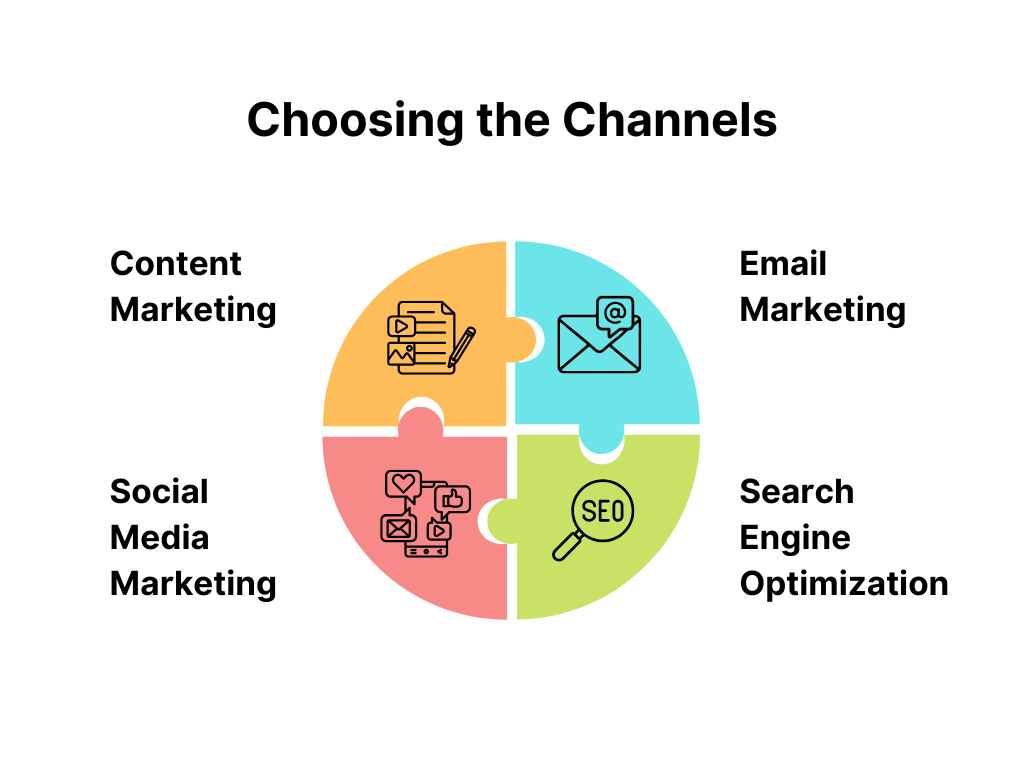
With a limited budget, Marcus suggested focusing on cost-effective channels first.
- Content Marketing: Hiring writers or a digital marketing agency altogether and starting to write blogs regularly. It helps to build trust and authority organically.
- Email Marketing: Emails give a direct and personal way to connect with customers. If done correctly and the right audience is reached, then the ROI can be strong.
- SEO (Search Engine Optimization): They would strategically use keywords to boost their presence on Google, as 95% of traffic goes to the first page of results.
- Social Media Marketing: They would focus on short-form video, which currently delivers the highest ROI at 21%.
The Five-Step Strategy Implementation
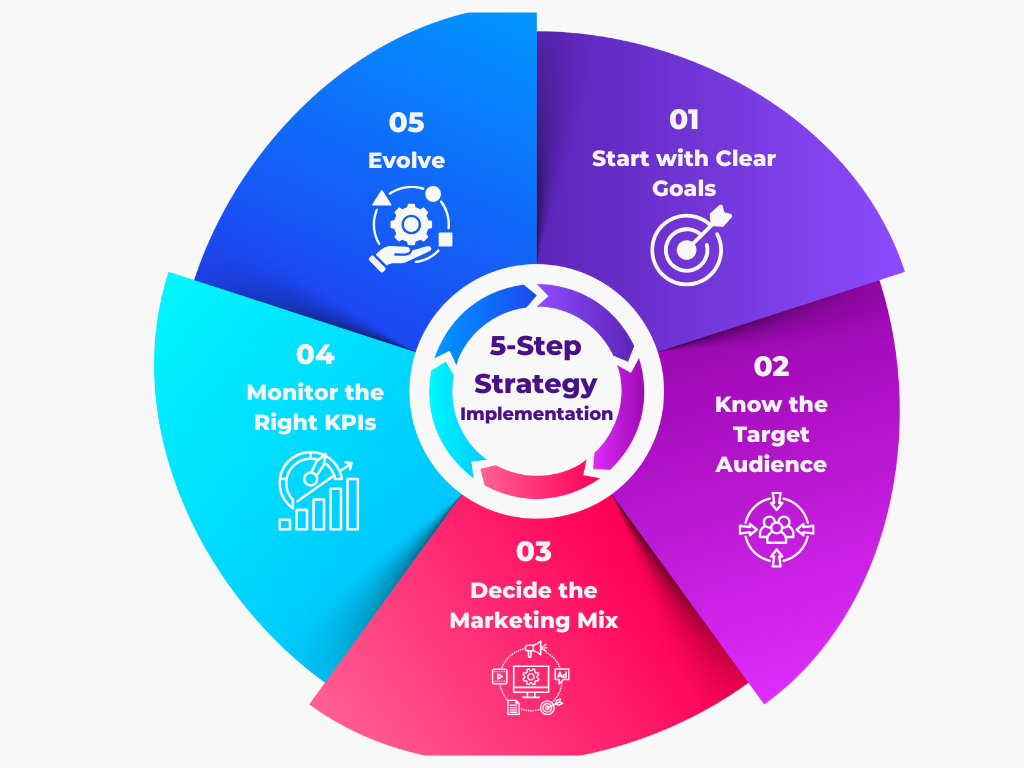
To wrap up the meeting, Marcus outlined their first marketing strategy in five clear steps:
- Start with Clear Goals: Firstly, define specific goals for your brand; the more specific the objectives, the clearer the vision gets. Decide what you want to achieve, like “reaching X number of social media followers” or “generating Y number of leads”.
- Know the Target Audience: Then reach those people who can help you achieve your set goals. Now, create detailed buyer personas to understand if their customers prefer shopping online or are price-sensitive.
- Decide the Marketing Mix: Channels are the ways/path walking on which the target can be achieved. Align the channels with the customer journey, awareness, consideration, and decision.
- Monitor the Right KPIs: Benchmarks would reflect their progress toward their goals.
- Evolve: Be adaptable and flexible throughout. Marcus emphasized that the landscape is always changing. “We must be open to testing new ideas and adapting our strategy”.
Tools for the Journey
Sarah asked, “Do we have the right tools with us? Should we invest in some?”
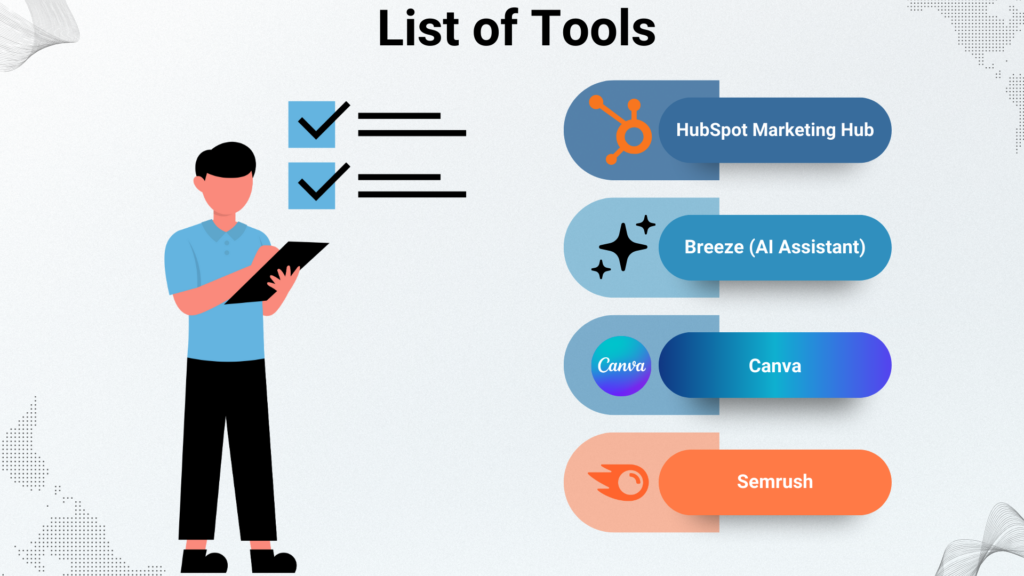
Marcus has a list of tools:
- HubSpot Marketing Hub: Manage email campaigns, social media posts, and performance reports in one place.
- Breeze (AI Assistant): Automate campaign planning and reply to customer questions instantly.
- Canva: Create professional graphics easily without needing a designer.
- Semrush: Improve SEO, find keywords, and track competitor performance.
The Conclusion: A Culture of Learning
As the meeting ended, Marcus handed Sarah a copy of This is Marketing by Seth Godin and Building a Story Brand by Donald Miller.
“A good marketer never stops learning,” he reminded her. “Markets, technology, and buyer expectations evolve, so our foundational strategy should evolve with them. We should revisit these fundamentals every quarter”.
Many marketers and individuals like Sarah, who are worried about how to create their first marketing campaigns. They might have taken help from the blog and the story of Marcus and Sarah.
Need expert help with your marketing campaigns? Let’s connect and hire a digital marketing agency to build a strategy that delivers results.
Reach out- inquiry@digitalbrainstech.com.